
A 300-Year Project?

I’m drawn to those who seek to be difference makers. That includes Christians who have an opportunity to make a difference as the early Church did in Roman society.
If you’re curious about what exactly they did, let’s go back to the US in the 1970s.
The 70’s are known for “mellow” music. This usurped 60s music which often called for revolution and everyone coming together in love. The Altamonte music festival was the death knell for all that. Time to turn the page and find other causes.
Like world overpopulation. In the ‘70s there were dire warnings that this would lead to mass starvation. Sitcoms began to reflect this. We went from Leave it to Beaver and The Brady Bunch (large families) to Cheers, Seinfeld, Friends. No families. No kids.
This imagery contributed to American families having fewer babies. Married and unmarried couples began to imagine they couldn’t enjoy the “good life” (think finances and freedom to do their thing) if they had a bunch of kids. Look what happened.
Since the ‘70s, the US fertility rate (the number of babies a woman is expected to have over her lifetime) has fallen to 1.6, the lowest in US history (a replacement rate of 2.1 is required to keep a population stable). But it’s not just the US. Global fertility averaged 2.25 last year, the lowest in recorded history according to United Nations estimates.
Now we see the warnings worked too well. We read dire warnings about the consequences of depopulation. Dean Spears and Michael Geruso, economists at the University of Texas at Austin, note how two-thirds of the world’s population now lives in countries with fertility below two, while in the rest of the world, including sub-Saharan Africa, fertility is generally falling. This is astonishing. Given the current depopulation trend, the world population will rise from 8 billion now to a peak of 10.2 billion in 2080 and then start to decline. And this decline will be difficult to arrest.
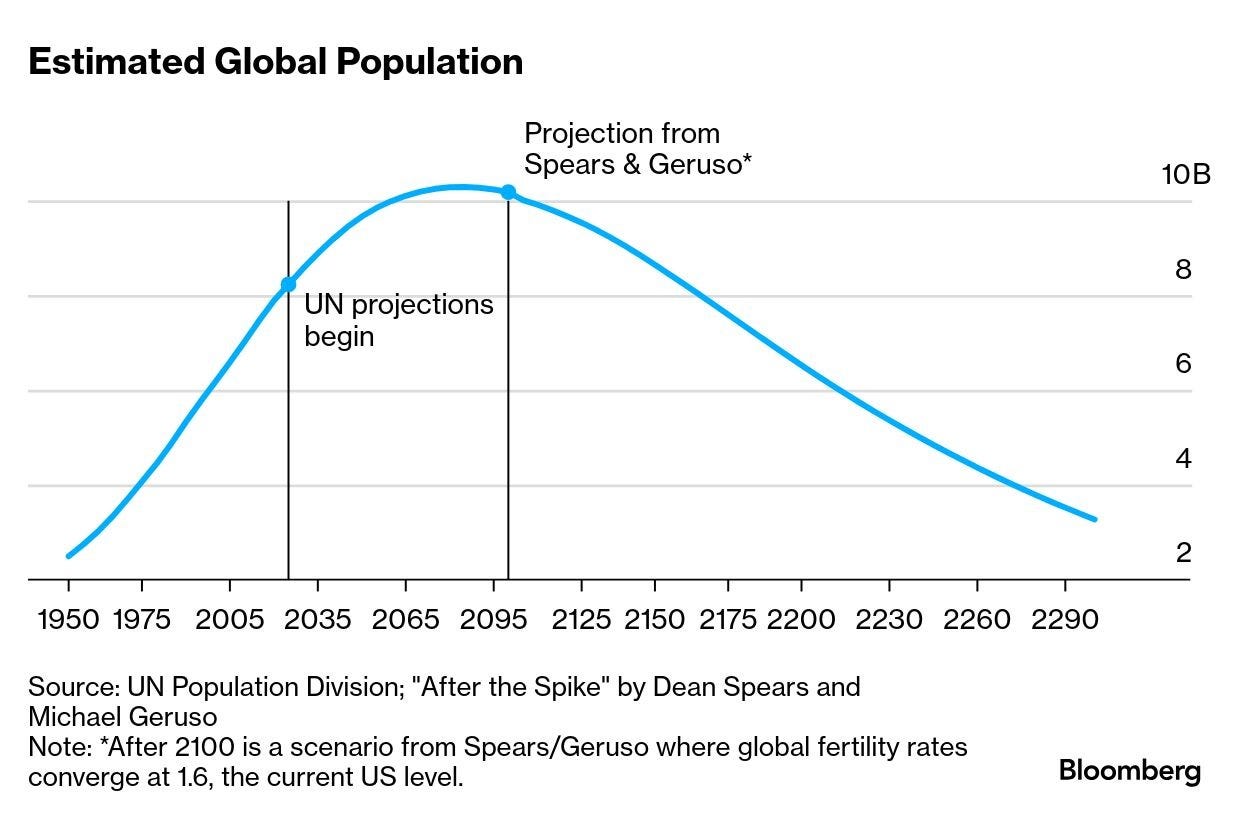
Look at China. Its one-child policy (1979 to 2015) restricted most couples to one child to curb overpopulation. It worked but caused severe demographic imbalances (shrinking workforce, rapid aging, skewed sex ratio). China reversed course in 2021, introducing a three-child policy. It hasn’t improved fertility rates. Chinese couples became accustomed to the financial benefits and “freedoms” of raising one child. Even government financial incentives for having more kids haven’t improved Chinese fertility rates.
And therein lies an opportunity for Christians. The early Christians lived during a time when the Roman Empire was facing declining fertility rates. You can read about this in The Rise of Christianity by sociologist Rodney Stark. He argues that the early Church promoted monogamous, heterosexual, permanent marriage that yielded higher birth rates than pagan Roman society. Over the next 300 years, the Christian population grew as the pagan Roman population shrank. By A.D. 300, over 50 percent of Roman society had become Christian. Stark attributes this growth to higher birth rates more than conversions en masse, even though they too are important.
So…if you’re a Christian of child-bearing age and seek to be a difference maker, do what the early Christians did given the times in which they lived (which parallel the times in which we live): develop a healthy marriage and bear lots and lots of children.
And give yourself grace. This might be a 300-year project.
And… if you’re a couple too old to bear children but seek to be difference makers, pray for Christian couples of child-bearing age who seek to have lots and lots of children. They’re seizing a history opportunity, and it might take 300 years to make a societal difference. Give them grace. Tell them you appreciate how they’re seeking to be difference makers.