
Dense, Overlapping Networks
Why the Vatican's document on AI is a hopeful start...

Years ago I got in a bit of hot water. I worked in a ministry that served university and college faculty. We were discussing what a faculty person needs to flourish when I posed two questions: why are there no faculty here to tell us what they need? And why do so few of us have a graduate degree, when all faculty have a graduate degree?
That got me in hot water. Some felt I was saying their work had no value. I wasn’t saying that. Of course it has some value. I was asking how we can claim to know what a faculty person needs having never operated inside faculty networks? I was suggesting faculty don’t value our work as much as they could because we don’t operate in their networks.
I got in hot water asking a similar question a few years later while in New York City. My morning was spent in an innovation lab connected to an international business. My afternoon was spent attending a conference on faith and work at a well-known church.
During the morning, I asked innovation lab leaders if they’d ever heard of this church. No one had. Later that day I asked the organizers of the faith and work conference if they’d heard of the innovation lab. No one had. In fact, there didn’t appear to be any businesspeople in attendance at the faith and work conference.
At the end of the conference I sat with the organizer. I asked how we can claim to know what a business person needs when there were no businesspeople in attendance to tell us what they need? That got me in hot water. He felt I was saying his ministry had no value. I wasn’t saying that. It has some value, just not as much as a ministry that’s interwoven in dense, overlapping networks of businesses in the city.
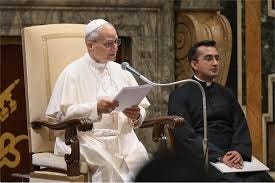
Which brings us to Pope Leo XIV’s first encyclical, “Magnifica Humanitas,” a document released on Monday discussing safeguarding the human person in the time of artificial intelligence. Much ink will be spilled over it in the coming days and weeks by people much smarter than I. I’ll leave it to them to help us discern what AI means.
I simply want to draw your attention to how the document’s release was historic: it included the presence of another figure: Anthropic co-founder Christopher Olah. Leo and Olah, a 33-year-old atheist tech leader, might seem to make an unlikely duo in championing a partnership in developing safeguards for the development of AI.
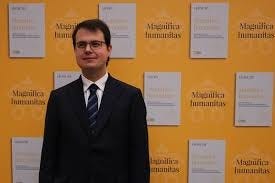
They’re not. For the last 10 years, the Vatican has partnered with networks of tech leaders to address the challenges and opportunities that AI presents. Olah is part of this partnership. On Monday, he highlighted the need for tech leaders to be in dialogue with people who are not motivated by the vast sums of money AI tech companies are chasing — some estimates put Anthropic’s value at about $900 billion — while Pope Leo said the “gravity of the moment” meant the church must lend its moral voice.
Olah agrees (remember, he’s an atheist). Olah said that the church’s voice is needed to “ensure the gains of AI are shared globally,” since its development is “concentrated in a handful of wealthy nations,” echoing themes from the encyclical.
“It is an unsolved problem, and it is the kind of problem the church has historically refused to let the world ignore,” Olah added, calling on religious communities, civil society, scholars and governments to “take this seriously, to look closely, and to push events in a better direction. We need informed critics who will tell the labs when we are failing. We need moral voices that the incentives cannot bend.”
In 2010, James Davison Hunter’s book To Change World was released. It got Hunter in a bit of hot water with some evangelical Christians. Hunter asserted that we’re not changing the world as the early and medieval Church did. She had global impact, changing the world by partnering with dense, overlapping networks of elites and the institutions that they lead – be they people of faith, no faith, or differing faiths.
Hmmm… does that sound like the release of Pope Leo XIV’s first encyclical on AI?
It does to me, which is why the Vatican document is a hopeful start.