
The First Half of Advent

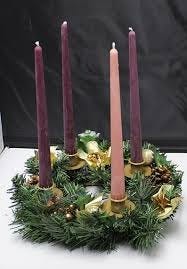
The first half of Advent began yesterday. Two halves? Yes, the early church observed Advent in two halves, a first half and a second. If you’re unfamiliar with the first half, you’re missing out on some critically important benefits of Advent.
The two halves of Advent are rooted in the ancient gospel of God wanting to marry us. This explains why Paul writes that when we come to Christ, we’re betrothed to one husband, Jesus. But we’re not presented to Jesus until his second coming.
What do we do between now and then? We prepare to be presented to Jesus our husband, as a pure virgin at his second coming. We do this because betrothal to Jesus doesn’t make us perfect. It makes us able to be perfected by repenting and repudiating our sin (penitence), thus preparing us to be presented to Christ as a pure virgin.
That’s what Advent originally meant – a season of penitence and preparation. During these four weeks, we ask God to open our hearts and make us more like Jesus by putting to death the deeds of our sinful flesh.
That takes time and effort. It’s why Advent was originally a 40-day fast, almost like a second Lent. The early church took this season seriously, as it was about penitence and preparing for Christ. But not just the birth of Christ. The first half of Advent was preparing for Jesus’ second coming.
I don’t sense many Christians are familiar with the first half of Advent. I say this because I don’t hear many Christians say they’re preparing to be presented to Jesus as a pure virgin at his second coming. That’s a big problem, and here’s why.
The problem is that no one, except for God the Father, knows when he will return. Because we don’t know, many lose sight of Jesus’ second coming. They profess to believe but become complacent about Jesus’ coming again. It’s so far off, what difference does it make today?
It makes a huge difference. We won’t be prepared for his second coming. It’ll be like the days of Noah, when everyone was eating, drinking, marrying, having fun and feeling at ease with God. That’s our day. Many Christians feel “at ease” with Jesus, assuming they’re saved and all set for his return. No need to prepare.
They’re catastrophically mistaken. First, because the Son of Man will come at an hour you do not expect him. Second, because Jesus warned that the unprepared “are assigned to a place of weeping and gnashing of teeth.” We can argue forever about what Jesus means here, but it seems to me the saner response is to do all we can to avoid this fate, a fate that awaits many who profess to believe.
If you want to avoid this fate, I offer some suggestions to help you be prepared.
During Advent, open your hearts to God. Ask him to reveal whether Advent for you is nothing more than a run-up to Christmas dominated by shopping, stringing lights, decorating the tree, and lighting a new Advent candle every week. None of these things are necessarily bad, but if that’s all Advent means to you, you’re in the suburbs of being unprepared and suffering a fate best avoided.
Second, take the first half of Advent more seriously. Do you spend too much time on your social devices? Don’t bemoan it. Repent and repudiate it. Turn off your social devices and spend more time with God, seeking him, listening to him.
Are you consumed by consumerism? Don’t bemoan it. Repent and repudiate it. Spend your money sacrificially on those less fortunate. Start being generous.
Any unreconciled relationships in your life? Don’t bemoan it. Repent and repudiate it. Ask God to make you an instrument of reconciliation.
They say a mind is a terrible thing to waste, but so is Advent. It’s a terrible waste if we only observe the second half of Advent, the birth of Christ. It’s the first half, the second coming of Christ, that prompts us to prepare us to be presented as the beautiful virgin bride that Christ longs for. Don’t waste this first half of Advent.